New episodes every Monday
 New episodes every Monday
 New episodes every Monday
New episodes every Monday
New episodes every Monday
New episodes every Monday
New episodes every Monday
New episodes every Monday
New episodes every Monday
New episodes every Monday
New episodes every Monday
New episodes every Monday
New episodes every Monday
New episodes every Monday
New episodes every Monday
New episodes every Monday
New episodes every Monday
New episodes every Monday
New episodes every Monday
New episodes every Monday
New episodes every Monday


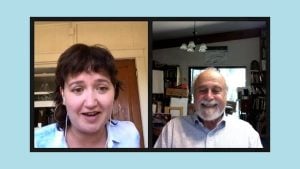
Shelby Hartman sits down with journalist Mattha Busby, to discuss the evolution of psychedelic culture, the legalization and therapeutic use of substances like shrooms and DMT, and the broader implications for society and individual healing.
Busby, a seasoned journalist, shares insights from his reporting on psychedelic movements, the ethical considerations surrounding the commercialization of these substances, and their biocultural significance.
The conversation also touches on the challenges and potential dangers of psychedelic tourism and the corporatization of these compounds, highlighting the need for informed and ethical practices within the burgeoning industry.
Topics We Cover:
-
Popularization of Psychedelics: The widespread growth in the use of substances like shrooms, DMT, and LSD.
-
Psychedelic Movement and Culture: Insights into the internal dynamics and cultural shifts within the psychedelic community are explored.
-
Legalization of Psychedelics: The conversation addresses the legal changes surrounding psychedelics, emphasizing their therapeutic applications.
-
Commercialization and Ethics: The ethical concerns of turning psychedelic substances into commercial products.
-
Psychedelic Tourism: The dangers and impacts of psychedelic tourism on indigenous cultures and communities.
-
Journalistic Perspectives: Mattha shares his experiences and challenges in reporting on psychedelic topics.
-
Veterans and Psychedelic Therapy: The use of psychedelics among veterans for dealing with psychological distress is highlighted.
-
Church of Psilomethoxin: A story about a group claiming religious protection to use psychedelics in the U.S.
-
Public Health and Psychedelics: The broader public health implications of psychedelic use and legalization are considered.
-
Psychedelic Exceptionalism: The idea that not all drug users or drugs should be seen in black and white terms, promoting a nuanced view of drug policy.
—
Got stories and questions for Trip Tips? Email us: magichour@doubleblindmag.com
Find Us Around the Web:
IG: @doubleblindmag
X: @doubleblindmag
FB: @doubleblindmag
Advertising/Business Inquiries:
Sales@human-content.com
Partnerships@DoubleBlindmag.com
Our theme song is Primordial Dance by OHMA
Part of the Human Content Podcast Network


00:00:03 Introduction
00:08:55 Mattha’s Connection to Psychedelics
00:17:26:19 Commercialization and Ethics
00:23:22:17 Psychedelic Tourism
00:39:04:17 Church of Psilomethoxin:
00:45:25:23 Veterans and Psychedelic Therapy
01:12:32:00 Psychedelic Exceptionalism
01:41:17:11 Conclusion
01:44:31:03 End Music
Hello, and welcome to the DoubleBlind Magic Hour, where we cover what’s going on in the world of psychedelics. From insider baseball drama within the rapidly unfolding psychedelic movement to the latest news on research, politics, and beyond, we’re here to talk with the most brilliant minds we know from the psychedelic frontier about the popularization of shrooms, acid, DMT—you name it.
Today, we are joined by a regular contributor to the magazine, NAA Busby. He’s also the author of the book *Should All Drugs Be Legalized? A Primer for the 21st Century*, as well as a contributor to *The Guardian*, *Vice*, and many others. Hey NAA.
Hey Shelby, thanks very much for having me on this exciting new podcast.
We’re stoked to have Fungi as the official sponsor of the DoubleBlind Magic Hour. Fungi makes psychedelic alternative chocolates and fruit chews activated with kanna. If you haven’t heard of or explored kanna, I highly recommend it. It’s a beautiful plant from South Africa that is growing in popularity. It is completely legal and provides a very heart-opening experience. Some people use it as an alternative to alcohol, while others use it in meditation—there are a lot of uses for kanna.
One of the amazing things about Fungi is that they not only include kanna but also other ingredients intended for gentle stimulation and having a good time. They can also be used as aphrodisiacs. Fungi’s products include a combination of kanna and functional mushrooms. From my personal experience, I really enjoyed taking these. I had a friend over the other day, we took some Fungi chocolates, did some yoga in my backyard, and it was just the gentle opening and relaxation we were looking for as we wrapped up our days.
Whether you’re going to a festival, on a mushroom trip, or just looking to have a good time with yourself at home in your backyard, I recommend checking out Fungi. Podcast listeners can get 25% off their first order—just use code DOUBLEBLINDPOD at fungi.com.
This episode is brought to you by our sponsor, Psyched Wellness. Psyched Wellness is on a mission to bring you the healing, restorative magic of Amanita muscaria mushrooms with their product, Calm. Calm is a unique, legal Amanita muscaria extract available for sale in the United States. It’s been formulated by wellness professionals to help you rest, relax, and keep stress at bay—all without the high. You can get some Calm in your life now and save 10% with the code DOUBLEBLIND at psychedwellness.com. So what are you waiting for? Drift into Dreamland with Calm—your mind and body will thank you.
And thank you so much for all the contributions that you have made to DoubleBlind. I can’t remember exactly when we connected, but you pretty quickly became a very regular contributor to DoubleBlind. It’s because you are one of those people who can write about anything. You can do quick hits on breaking news, longer magazine-style features, profiles—you’ve done it all and you do it all for DoubleBlind, and we really appreciate having you as part of the team.
Well, thanks so much. I think I was pretty much looking for folks to run serializations of a short bit from my book a couple of years ago. I had just written a piece for *The Intercept* about something to do with Biden and his cabinet and psychedelics. You guys very kindly put an extract of my book in your magazine and were like, “Why don’t you start writing some articles for us?” And it kind of went from there. So yeah, really great to be on board. It’s really worked out. I think one of the things that is most interesting about you is that you write about psychedelics and drug policy, but you also write about a lot of other things, right?
Yeah, I was originally a news reporter at *The Guardian* in London, covering court cases, protests, and writing about random things like the weather. Reporting covers a lot of ground—one day you’re covering a gay pride parade, the next day you’re covering the fact that Uber might automate its vehicles, the next day you’re interviewing an artist. It’s really fun, and then at some point, you choose a beat. Do you consider psychedelics and drugs your beat?
I would say so, yeah. Drug policy or health policy, as I’ve written quite a bit on food and wider policy. Recently, I’ve been writing for a wider collection of publications because I haven’t been working so much at *The Guardian* anymore. It’s been great to be here, expanding my expertise and getting my head around some of these more mind-bending things that are going on.
It’s always really interesting to me how people stumble into writing about psychedelics. A lot of reporters, more and more, are writing about psychedelics without ever having done them. For those of us who have been doing it for at least three, four, five years, most of us kind of fell into it because we were doing psychedelics, and in our day jobs, we were journalists. At some point, the trajectories merged. Is that your story? How did you fall into it?
Pretty much, yeah. Back in 2015, I was living in Montreal and working for the student newspaper at the university. Around that time, I began having experiences with psychedelics. It was just a coincidence—I thought it was interesting and no one was talking about it, so I went from there. I advise people not to check out my stories from 2015, though.
Right, don’t check out my stories from the beginning of my career either. Google buries all these stories that DoubleBlind publishes that we don’t want them to bury, but they still keep my byline from when I first became a journalist at the top of the page.
Yeah, I’ve asked to have an article taken down before, but they said they couldn’t do it. Instead, I could write a letter, and they would publish it at the bottom of the story. But I figured that might just attract more attention to the story.
Frankly, it can be forgiven. It’s a crazy thing when you’re first learning to report, and you really do get thrown into the belly of the beast. When I first became a journalist, I was working at CBS News. My editor handed me a recorder and told me to go to the White House to start interviewing people at a protest. I was like, “Okay,” and that’s how it goes.
Having that baptism of fire in established media companies does hold one in good stead. There were so many occasions when similar things happened to me. Now, it’s amazing to be writing about such interesting things without too much jeopardy or crazy deadlines. It’s a bit of a blessing, really.
Maybe this is a silly question, but why are psychedelics interesting to you as a beat?
First and foremost, I’m seeing how from the ground up, psychedelia is transforming society in subtle ways but also in revolutionary ways. States are responding by dialing down their drug wars in various ways, so we’re not having the same kind of confrontation as in the ’70s. On a personal level, some of the most interesting, transformative, powerful, and scary experiences of my life have been under the influence of psychedelics. I’ve been to the Amazon and drunk ayahuasca, and I’ve been in the Mexican desert hunting peyote. These experiences leave quite an impression on you. To then look into what the issues are, like people being arrested for facilitating ayahuasca ceremonies in Romania or issues facing the Wixárika people, who are the custodians of the peyote medicine, these things are quite close to my heart. They’ve helped me grow as a person, explore different states of consciousness, and really open my heart.
Wow, you have been to so many incredible places and met so many incredible people. How do you end up in all these places, and how do you find stories along the way?
It’s just a sort of intrepid curiosity. I was living in Mexico during the pandemic for two years. When you’re living in Oaxaca and you get tapped in with folks putting on peyote circles, things lead in certain directions. It’s been incredible being able to visit places like the home of magic mushrooms, Huautla de Jiménez, and meeting the family of María Sabina. I cried—it made quite an impression on me. I spoke to her great-nephew about her legacy and her grandson. They’re such humble people. I don’t think they fully grasp the historical significance of María Sabina telling Gordon Wasson about magic mushrooms, which led to the West rediscovering or appreciating their healing powers.
I don’t think they quite comprehend it, but I tried to convey the significance. It was incredible to visit Huautla, just 10 hours away from where I was living on the coast of Oaxaca. I drove my motorbike to Oaxaca City, met some folks, and we drove another four hours. It can happen.
For folks who don’t know, can you give a brief summary of María Sabina’s significance? Gordon Wasson is often credited as the one who brought magic mushrooms to the West, but Sabina is a pivotal figure.
Basically, in the mid-1950s, Gordon Wasson, a JP Morgan executive with an interest in mycology, and his wife Valentina, who was super interested in mushrooms, heard about psychedelic mushroom use in a distant part of Mexico. They went down there and participated in a ceremony with María Sabina, a curandera. Wasson published an article in *Life* magazine that went viral for its time, though he may not have gotten the requisite permissions from Sabina. This led to the location being swamped with people wanting to experience magic mushrooms.
Sabina’s significance lies in her role in introducing the West to the healing powers of magic mushrooms. There’s a direct tie between what happened in Huautla and the commodification and corporatization of psilocybin as a synthetic compound used in therapeutic contexts today.
There’s serious reciprocity questions for the big players in the psychedelic industry over how they can help the communities that discovered and protected this knowledge. It’s not enough being done by many companies that stand to make big profits.
We’ll talk about all these threads in the rest of the podcast. But first, we’ll take a quick break.
Did you know that there is one phase of sleep that almost everyone fails to get enough of? This phase is responsible for most of your body’s daily rejuvenation and repair, controlling hunger and weight loss hormones, boosting energy, and more. I’m talking about deep sleep. If you don’t get enough, you’ll struggle with cravings, a slow metabolism, premature aging, and even worse conditions. One big reason for this is magnesium deficiency. Over 80% of the population is deficient in magnesium, which increases GABA and encourages relaxation on a cellular level, critical for sleep. Most magnesium products only have one or two forms, but your body needs all seven forms. That’s what makes Magnesium Breakthrough by BiOptimizers unique. It contains all seven forms of magnesium to help calm your mind, help you fall asleep, stay asleep, and wake up refreshed. For an exclusive offer, go to bioptimizers.com and use promo code DOUBLEBLIND during checkout to save 10%.
DoubleBlind began as a print magazine and it’s still at the heart of what we do. I spent my career as a journalist reporting on psychedelics, cannabis, and drug policy for *Rolling Stone*, *Vice*, *LA Weekly*, and other outlets. Journalism is in crisis, but we started DoubleBlind anyway because we believe in the value of good journalism to educate and hold stakeholders accountable. We saw what happened in cannabis—pioneers who put their lives on the line getting left behind because they didn’t have the capital to compete in the regulated market. We’ve seen what’s happened in mental health care, where millions of people suffer and don’t trust their doctors or can’t afford proper care. In our print magazine, we feature essays, investigations, photojournalism, and more by world-class journalists. This is all made possible by our members, who get direct access to psychedelic experts, workshops, and a subscription to our beautiful print magazine. Subscribe today at doubleblindmag.com/membership.
Okay, so we’re back, and we’re going to get into some of the stories you’ve reported for DoubleBlind, including an interesting story about a group of veterans going by the Church of Silomycotoxin in Austin, Texas. Before we do that, I wanted to talk to you a little more about your experiences in Huautla. Hopefully, at some point, you’ll write a story about this. I’ve been wanting us to publish a story on the tourism industry in Huautla since DoubleBlind started. It’s really like being in the heavens—the clouds intersperse with the town and the houses, making it a magical place. Many people you overhear in the town are speaking the Mazatec language, not Spanish. Nearby, there are fields where you can find magic mushrooms. We met a local guide and paid tribute to a local community before going to look for mushrooms. The ones we found were called “hombre,” though I’m not sure if they were Psilocybe cubensis.
There’s an industry for magic mushroom ceremonies and foraging, but questions remain about the legitimacy of some curanderos and curanderas today. There’s no malicious intent, but in our experience, certain things were left to be desired during our ceremony. I’ve heard similar stories. Now, westerners are also putting on retreats in Huautla, supporting Mazatec medicine people and bringing outsiders for an “authentic” experience. It’s quite a sight, with people walking up the mountain behind María Sabina’s house, many wearing shirts invoking mushroom iconography and some holding crucifixes.
What has happened in Huautla is also happening in other parts of the world, like Pucallpa, Iquitos, and Gabon. We see the same problems: healers with integrity and training, and others taking advantage of the growing interest in psychedelics. It ranges from those who know what they’re doing to those who see an economic opportunity. It’s crazy how you can show up and find yourself in less-than-ideal settings. Patience is key when looking for a facilitator, especially in a foreign country.
Moving on, let’s talk about the Church of Silomycotoxin. Established in November 2021 by combat veteran Ian Benouis and others, this church aims to make a novel psychedelic, silomycotoxin, available. Described as a powerful psychedelic similar to 5-MeO-DMT, it can quickly disintegrate your sense of reality and self. You’ve tried it—tell us more about your experience and the church’s mission.
I first heard about them early last year while living in Mexico City. They organized their first in-person church gathering in Austin. Just before the event, a paper came out suggesting their sacrament only contained trace amounts of psilocin and psilocybin, which many members disputed. As experienced psychonauts, they felt the effects were distinct, similar to a transcendent, heart-opening experience rather than the activation of mushrooms. Ian was trying to create an orally active 5-MeO-DMT-like experience. I tried silomycotoxin, and it was unique, unlike any other psychedelic I’ve tried.
Did you have visuals?
Not really. I took about four grams in chocolate once and didn’t have a breakthrough like with mushrooms. It was more relaxed. Mixed with ketamine, I had intense visuals with my eyes closed. Silomycotoxin and ketamine together created an intense, unique experience.
Ian and other veterans involved in the church have suffered psychological distress from their time overseas. Some might see their services as more like Burning Man parties, but they genuinely believe in what they’re doing. They’re trying to find a way around the Controlled Substances Act by synthesizing a novel psychedelic that the DEA hasn’t scheduled yet. They see it as a way to help people, especially veterans, without waiting for FDA approval. Their church has 1,500 members, and they’ve been distributing silomycotoxin across the US and abroad, mailing it in chocolate bars.
What they’re doing might be illegal, but tests haven’t consistently detected psilocin or psilocybin. Some speculate it’s oxidized 5-MeO-DMT. They feed psilocybin mushrooms with 5-MeO substrates while growing them. They legally established the church with Texas authorities but don’t have a specific exemption. They aim to get the medicine to people now, without waiting for the FDA. While they might be making money, they’re also genuinely trying to help people.
The question of whether all drugs should be legalized is complex. We need regulation, whether community-based or through the FDA. Testing and reducing harm are crucial. Psychedelics are transformative, but the broader drug policy reform and the drug war are interconnected. We must stand up for more significant political changes and consider the broader context of drug use and reform.
Thank you for joining us today, NAA. To learn more about the DoubleBlind Magic Hour, visit doubleblindmag.com. For questions or suggestions, email us at magichour@doubleblindmag.com. Special thanks to our producers and the team at DoubleBlind. Join us each week on YouTube and wherever you get your podcasts.