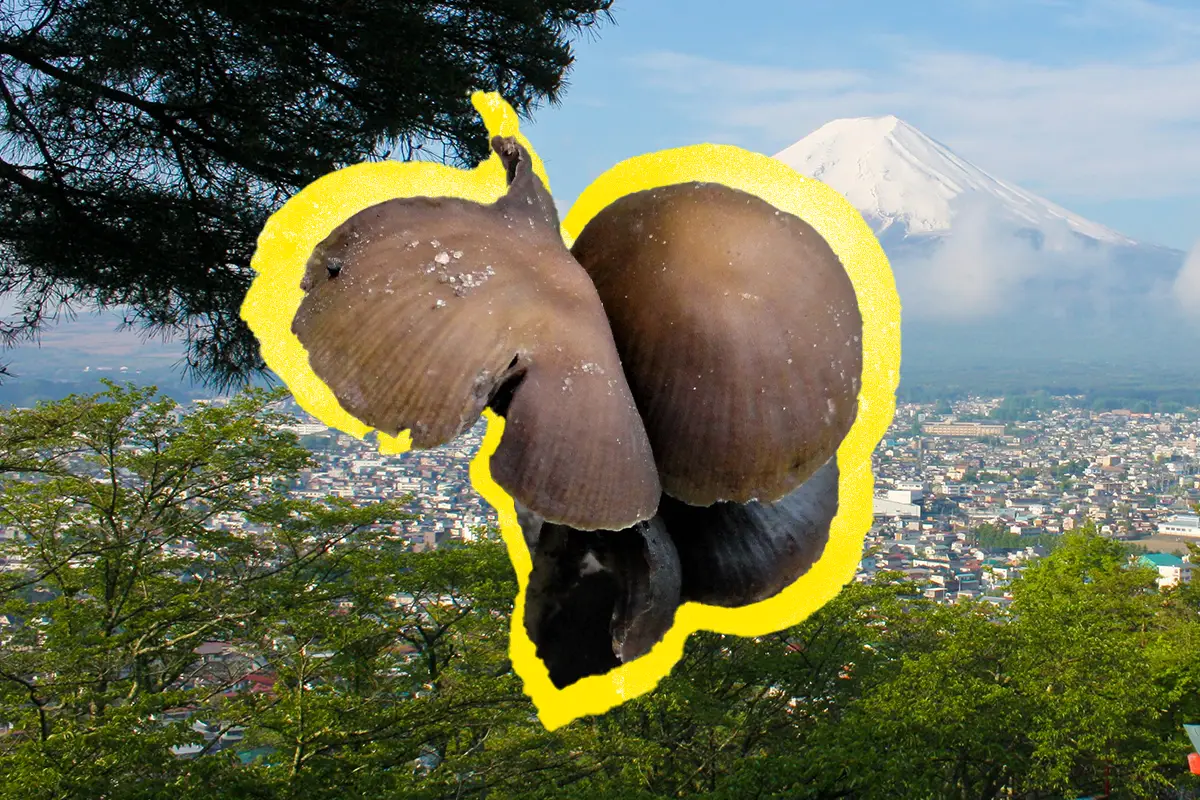

Psilocybin-containing mushrooms are widely regarded as being safe. There are caveats about being cautious while foraging so as not to pick the wrong species, strategies around reducing some mild gastrointestinal discomfort for some people when consuming, and caution with some health issues; otherwise, there are few risks.
So imagine being a couple of hours into your psychedelic journey and everything is going well. You get up to walk around a bit, but suddenly your legs become weak and you find yourself needing to sit or lie down, then unable to move them. This is one of the general presentations for the toxidrome (a portmanteau of “toxic” and “syndrome”) referred to as “wood-lover’s paralysis,” or WLP.
It’s worth noting that wood-lover’s paralysis is considered rare. While it’s important to be aware of its potential effects when consuming wood-loving psilocybes, especially when consuming mushrooms from a new patch, please feel reassured in knowing that the condition does not always happen. This article is about harm reduction, but also investigating the history of WLP, the species identified as causing WLP, the known effects, and what research is being done to better understand it.
READ: How to Identify Magic Mushrooms: Step-by-Step
What Wood-Lover’s Paralysis Feels Like
An anonymous source, when asked, described their experience of WLP like this: “I was sitting at my desk after a friend had gone to bed, when my mouth jaw lost the strength to chew the corn chip I was eating. Not long after I had scraped it out of my mouth, my chin started to flop down onto my chest over and over again each time I used my hand to lift my head back upright. Not long afterward, my back weakened, and I couldn’t sit up straight. I decided to go to bed and hope for the best. This is not an advisable approach, knowing now how others have reported breathing difficulties from it, but I didn’t know anything about WLP at the time. By the time I had walked 6 meters or so towards the light switch, I had collapsed entirely. First to my knees and hands, then my knees and elbows, then flat out on the ground. I couldn’t make enough noise to yell for help from my friend, who was sleeping close by. I lay on the ground for a few minutes, totally unable to move, before my strength started to return. I slowly got up, and made it just as far as the bed before I started to feel the weakness return. I woke up the next day with some weakness in my hands, which went away throughout the day. To varying degrees of intensity, this happened dozens of times over a few years, picking from that same forest.”
While we don’t know the cause or the exact details behind the physiological response, we can describe its symptoms. WLP investigator and medical doctor Simon Beck describes WLP as “a syndrome of varying degrees of weakness that has been reported after ingesting several different lignicolous species of Psilocybe. It commonly starts within two hours of ingestion but sometimes comes on as late as the next day. It can affect different body parts, and the weakness may get worse in the muscles you are using. The hands are commonly affected. It often makes walking or taking care of yourself difficult or impossible. It can make chewing and swallowing hard and can make it easier to choke on food or fluids. In some cases, people report it makes breathing harder.”
In 2020, Beck and I ran a survey hosted via the Australian Psychedelic Society website to learn more about the toxidrome. The results of the survey were later discussed on a webcast hosted by the Australian organization Entheogenesis Australis. “In about half of cases, it lasts until at least the end of the psychedelic effects, and in just under half [of cases], there is some weakness the next day,” Beck said. “Rarely, some weakness might still be present two to three days later.”
READ: 6 of the Best Books About Foraging for Edible and Psychedelic Mushrooms
In addition to potentially lasting a couple of days, one of the concerns around WLP is that the weakness can come back after feeling like it has resolved. “This can lead to accidents in hazardous situations, including the following day, if weakness persists or returns,” Beck said.
The results of the 2020 survey described how those who experience WLP report being unable to walk, use their hands, or eat. In severe cases, it also affects their ability to breathe. With movement, individuals become aware of a weakness in their muscles that gets worse, resulting in the inability to move the muscles — hence why it has been referred to as a “paralysis.” The effect is known to be temporary, usually wearing off after 24 to 48 hours, but for the unprepared, it can be an anxiety-inducing experience.
A Brief History of Wood-Lover’s Paralysis
For a couple of decades now, cautionary tales about WLP have appeared in numerous internet forums. And while it has been a regular topic of conversation among foragers of lignicolous (wood-loving) Psilocybes for the past decade, WLP has only started to gain credibility as a real effect in the last few years. The toxidrome gained significant credibility in 2020 when the Oregon Psilocybin Advisory Board, which makes recommendations to the Oregon Health Authority, ruled that only Psilocybe cubensis be used for commercial purposes, listing WLP as one of its concerns.
While WLP does seem to be a recent phenomenon, reports of a weakness associated with consuming Psilocybe dates further back in academic literature. The first likely report was in a 1973 paper from Japan by Kazumasa Yokoyama, titled “Poisoning by a hallucinogenic mushroom, Psilocybe subcaerulipes Hongo.” Three people experienced symptoms, including feelings of elation, paralysis of the limbs, and vomiting. What is interesting, in parallel with Beck’s reporting, is the description of how one of the individuals “fell down because of the complete paralysis of the limbs,” but notably this was experienced “intermittently three times.” It was also reported that “in the next morning, faint paralysis still remained in the limbs, but it disappeared in a day.”
In “An Ethnomycological Review of Psychoactive Agarics in Australia and New Zealand,” published in 1991, authors Allen, Merlin, and Janson mention numerous cases of muscle weakness and paralysis as a result of consuming wood-loving fungi. The authors attribute the weakness to herbicides, but the paper describes effects remarkably similar to WLP: “one of the present authors (Jansen) has attended a person in his home who was suffering from marked weakness of the respiratory muscles, with accompanying shortness of breath,” with the symptoms continuing “for at least 18 hours after the return of a normal mental state.” Other people consuming mushrooms from that paddock “also suffered various forms or muscle weakness … extending in all cases for many hours beyond the end of the change in consciousness.”
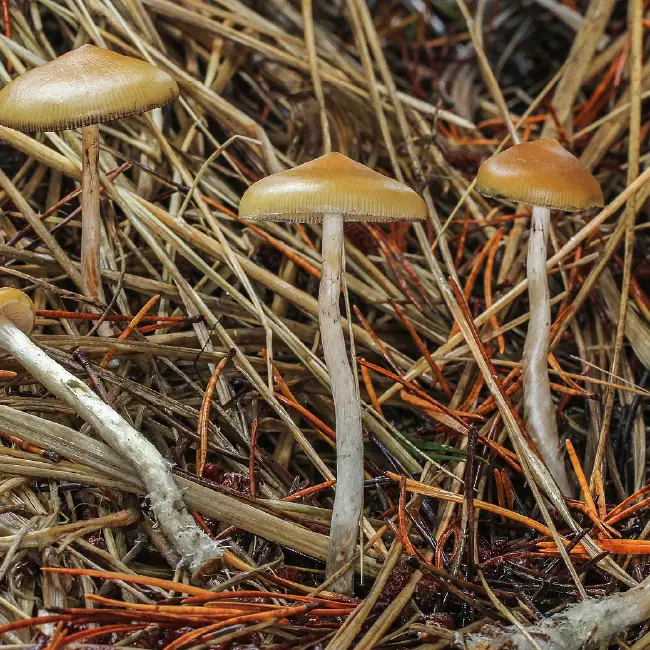
In fact, muscle weakness occurring as a result of consuming Psilocybe azurescens Psilocybe cyanescens was well known enough by 1996 that mycologist Paul Stamets mentioned in Psilocybin Mushrooms of the World that, “at higher doses, some people report a loss of muscular control and strength that can persist into the following day,” but then later concludes that “no plausible explanation has been put forth.”
In an article titled “What It’s Like to Trip on the Most Potent Magic Mushroom” in the June 4, 2018 issue of The Atlantic, author Michael Pollan described how, while foraging for P. azurescens with Stamets, the mycologist warned him about a “temporary paralysis.”
Early online information is scarce, and it is likely that some online information has been lost to history, but an early post from 2001 in The Shroomery by member budshroomey titled “I cannot fucking walk” described their experience with Psilocybe azurescens: “2 grams tops of azures, chewed, put in tea, smoked a little (very tasty) what a great trip but….my legs rebel against me, tried going out for smokes an hour ago and it aint werkin…i have heard of paralysis, temporary, resulting from eating way too much..”. Member Some Guy then described their experience, saying, “I had that exact thing happen with cyans last year in February. Had a pretty good dose ingested by making tea. AFTER the trip was over, I gradually but progressively lost ALL use and control of my muscles. I literally could not walk, lift my head, move my arms, etc.”
Finding older information on the topic proves to be problematic, in part because of the language around the topic. “Muscle paralysis” was used in association with P. azurescens in a post in 2002, titled “Azurescens and Muscle Paralysis” by member Joshua, in 2005 as “mushroom poisoning” by member capnkirk, and in 2008 as “cyanescens paralysis” by Tron Soldier. The term “Mushroom paralysis (wood lovers)” was used in the title of a post in 2009 by a member, notapillow. The term “wood-lover’s paralysis” has, in the meantime, stuck and is now commonly used to refer to the effect.
Species Known to Cause Wood-Lover’s Paralysis
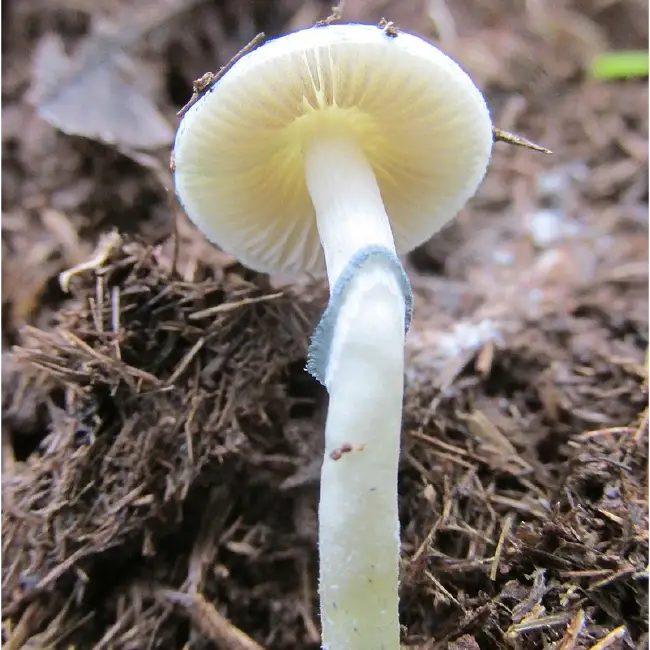
There have been no further reports regarding P. subcaerulipes from Japan, but the species typically reported as being responsible for WLP are from a group of Psilocybe species referred to as Section Subaeruginosae (or Section Cyanescens by another name), including “P. subs” (P. subaeruginosa), “Wavy Caps” (P. cyanescens), “Flying Saucers” (P. azurescens), P. allenii, and “Weraroa” (P. weraroa). There are also reports of “Ovoids” (P. ovoideocystidiata) causing WLP.
These species typically grow in wood chipped beds and, other than Ovoids, are now known to originate from Australia and Aotearoa (New Zealand). Dr. Alistair McTaggart, a fungal geneticist working in Australia, has used population genomics to study how P. subaeruginosa is structured in Australia. The species is endemic to Australia and widely distributed across the continent, with many populations. “The genomic data show that P. subaeruginosa is spread within Australia by movement of mulch or wood chips,” McTaggart explained. “Sibling genotypes appear in geographically distant landscaped areas.”
McTaggart’s research also shows that “isolates of P. azurescens and P. cyanescens from the northern hemisphere clustered within and among natural populations of P. subaeruginosa in Australia,” indicating they are likely the same species, spread through “movement of plants, soil, or wood chips from Australia to the northern hemisphere.”
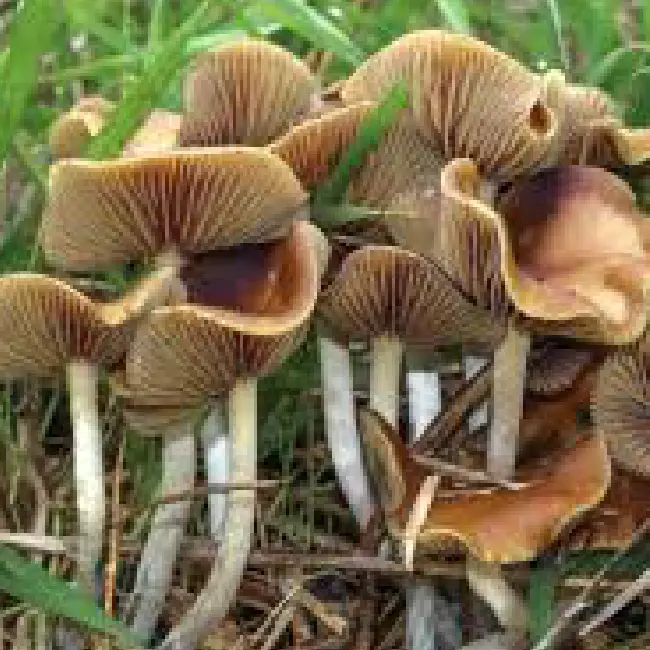
“Related taxa in the northern hemisphere should therefore be considered escaped populations of P. subaeruginosa with low genetic and phenotypic diversity,” McTaggart said. These escaped populations also include interesting variations in the Psilocybin Gene Cluster, which may go some way to explaining what causes WLP.
What Causes Wood-Lover’s Paralysis?
At this point, there is no known cause for WLP, but there are plenty of online theories about it, with people regularly contributing their own particular expertise to teasing out what may be happening to those who experience the toxidrome. The most common theories are:
- That the fungi are absorbing environmental toxins.
- That the fungi are absorbing or metabolizing something from the substrate.
- There are toxic molds growing on the mushrooms.
- There is some kind of bacterial poisoning.
- Something is feeding on the mushroom and excreting toxins.
There are also theories about how it could be an individual response, such as allergies or individual immune responses, rather than anything to do with the mushrooms themselves.
In our survey, Beck and I included questions on habitat and substrate, finding that across all the participants who experienced WLP, they had foraged from multiple environments and multiple substrates. From this observation, we concluded that environment was not a factor, also pointing out that if molds, bacteria, or environmental toxins were responsible, why are wood-loving Psilocybes the only species producing the toxidrome, and why are other edible species found in the same habitats not causing similar effects?
Given the likelihood that it is a compound within the mushroom itself, one of the main theories currently proposed is based on the similarity of the tryptamine aeruginascin to bufotenidine. Bufotenidine is a toad venom that is known to cause muscle paralysis. Aeruginascin undergoes the same dephosphorylation process as psilocybin when it is converted to psilocin. In the case of aeruginascin, it could be argued the resulting compound, 4-hydroxy-trimethyltryptamine (4-ho-tmt), is expected to behave similarly to bufotenidine — both contain a third methyl group, and neither compound is able to cross the blood-brain barrier. As a result, they are probably confined to peripheral circulation in the body, where they affect tissues containing the appropriate receptors. If this is the case, Beck has proposed it may act like an antinicotinic neuromuscular blocker.
Treatments for Wood-Lover’s Paralysis Are Largely Anecdotal
The lack of knowledge and uncertainty around WLP means that people who experience it often refer back to online communities on The Shroomery or various Facebook groups. Because much of the information regarding WLP is either anecdotal or based on theory, communicating appropriate harm reduction information can be tricky.
Some have suggested that antihistamines may help, but Beck said that this idea is rooted in an “unlikely” theory about what causes WLP. “I don’t think [antihistamines] could be considered a reliable treatment or preventative approach,” Beck said, “and some antihistamines cause some side effects that can be troublesome in some people.”
Before more effective, evidence-based treatments can be suggested, Beck said that there simply needs to be more research about what causes WLP in the first place.
Harm Reduction and WLP
Given the many unknowns surrounding WLP, harm reduction strategies are especially important here. That said, other than articles describing WLP and the material published by Beck and myself, there is little information available online about it — and there is no academic literature describing it, what it is, or how to treat it. As a consequence, there is a lack of harm reduction information and, importantly, a lack of knowledge around how health professionals should treat WLP in the rare case that someone needs medical care.
The biggest concern are the reports of people experiencing breathing problems. “There is one report of witnessed breathing problems while experiencing WLP that led to low blood oxygen and required CPR, intubation, and spending the night in hospital on a ventilator to avoid death,” Beck said. In cases like these, “the best way to help someone experiencing WLP is to know when and how to do CPR. You should call for an ambulance immediately if there are signs of dropping consciousness or low oxygen like bluing of the lips, or if it feels like breathing is becoming labored.”
Beck also advised that one should “never hesitate to call an ambulance if something doesn’t feel right.” If you do call an ambulance, it is important to mention that psilocybin-containing mushrooms have been consumed, as the paralysis may be misdiagnosed as the autoimmune disorder Myasthenia gravis, which can result in being intubated. Therefore, if you think you or someone may be experiencing WLP, it’s important to communicate that, because they and the doctors at the hospital may not be familiar with it and may not recognize it. “If someone seems better by the time the ambulance arrives,” Beck continued, “remember and inform them that it can come back suddenly, and [that] cases of severe breathing difficulties from the weakness have been reported.”
Dr. Monica Barratt, a drug policy expert and Senior Research Fellow at RMIT University, said that in the absence of evidence-based treatments, basic harm reduction strategies are the best bet here: “Don’t use alone, or if you do use it alone, have a buddy who will check in on you at specified points. If you don’t answer your phone, [agree that] they will come over and check on you physically.”
If you are experiencing WLP, “try and get to a safe, warm, comfortable place and do not try to move around too much,” Beck added. “Stay on your side in the recovery position, and roll onto the other side periodically if unable to mobilize for long periods to avoid pressure injuries. Do not try to eat. If you must drink to keep up your hydration, ensure you are sitting upright and take small sips of water.”
Given how the weakness of WLP can come and go, Beck also said to “never swim, climb, hike, drive, or ride if you notice any weakness after taking mushrooms, and ideally avoid these activities for at least one day afterwards. Remember that it can come back on suddenly even after it feels like it has improved.” Beck also emphasized the importance of a sober trip sitter, and that it is important to have a plan to contact help in case of emergency.
Avoid Patches With a History of WLP
It has been identified that it is highly likely that WLP will happen from patches that have caused the toxidrome before, so it is important to avoid those patches that have been known to cause WLP in the past. Some populations of wood-lovers cause WLP over multiple years, while other populations don’t cause WLP at all. This makes sense, given how a genetic factor is expected to control the expression of the compound that causes WLP.
iNaturalist has a wood-lover’s paralysis tracking project on repeat patches, where people can record accurate locations, photos of the species, and descriptions of the habitats and substrates. In time, it would be great to have genomes and chemical profiles of each spot to better understand the compound(s) involved and the populations. This is an opportunity to help others be safe and help research.
What’s Next, in Terms of Research
Given the mystery around WLP, there is, therefore, a fascinating opportunity for research. Ian Bollinger, who is a cofounder of the first public psilocybin mushroom testing lab and the Psilocybin/Hyphae Cup, entheogen researcher, and educator, said “this lack of concrete understanding is a piece of low-hanging research fruit that demands attention.”
McTaggart agreed that “WLP should be an area of research in its own right; a fungal metabolite that causes temporary paralysis has heaps of potential for innovation.”
“There is a strong case here for a funded research project with the aim to develop a tool that can detect WLP-causing agents in mushroom samples,” Barratt says. “Even further, imagine if one could develop a process to remove the agent. Then of course, to do any of that, we need to know the causal mechanism for this syndrome.” Investigating any of these points “would have very practical implications for harm reduction,” Barratt says, “given that mushroom foraging is hardly going to stop any time soon, and is likely indeed to continue increasing.”
Ian Bollinger — a cofounder of the first public psilocybin mushroom testing lab and the Psilocybin/Hyphae Cup, entheogen researcher, and educator — said that his research has shown “features of the Psilocybin Gene Cluster that make those mushrooms classically associated with WLP (Ps. subaeruginosa, Ps. allenii, Ps. cyanecens, etc.),” and that these same features make them unique from their European and American counterparts. A “gene-triplication feature in the Psilocybin Gene Cluster is something we have only observed in Section Subaeruginacea, with hints of similar but still unique duplication of the same gene in American Indigenous Psilocybe species.”
Bollinger and colleagues from the Entheome Foundation have been busy working with newly sequenced genomes of different Psilocybe species. “The most prominent feature,” Bollinger explained with reference to Section Subaeruginosae, “is around gene duplication and mutation. We describe this in a publication the Entheome Foundation is pushing out this year. We specifically note that one of the integral genes for psilocybin production is not only present but has two extra copies, one of which is seemingly broken while the other is believably functional.”
According to McTaggart, “Psilocybe subaeruginosa had a ‘copy and paste’ genomic event, where the gene that metabolizes tryptamine into 4-hydroxytryptamine (psiH) was duplicated.” Genetic mutations may, over time, give some populations of a species advantages over others; the duplicated gene could infer different metabolic activities that provide some benefits we are not yet aware of.
“There are individuals in populations of P. subaeruginosa that have a genotype to produce a tryptamine analogue that may bind to peripheral serotonin receptors and cause paralysis in addition to a psilocybin experience,” McTaggart said.