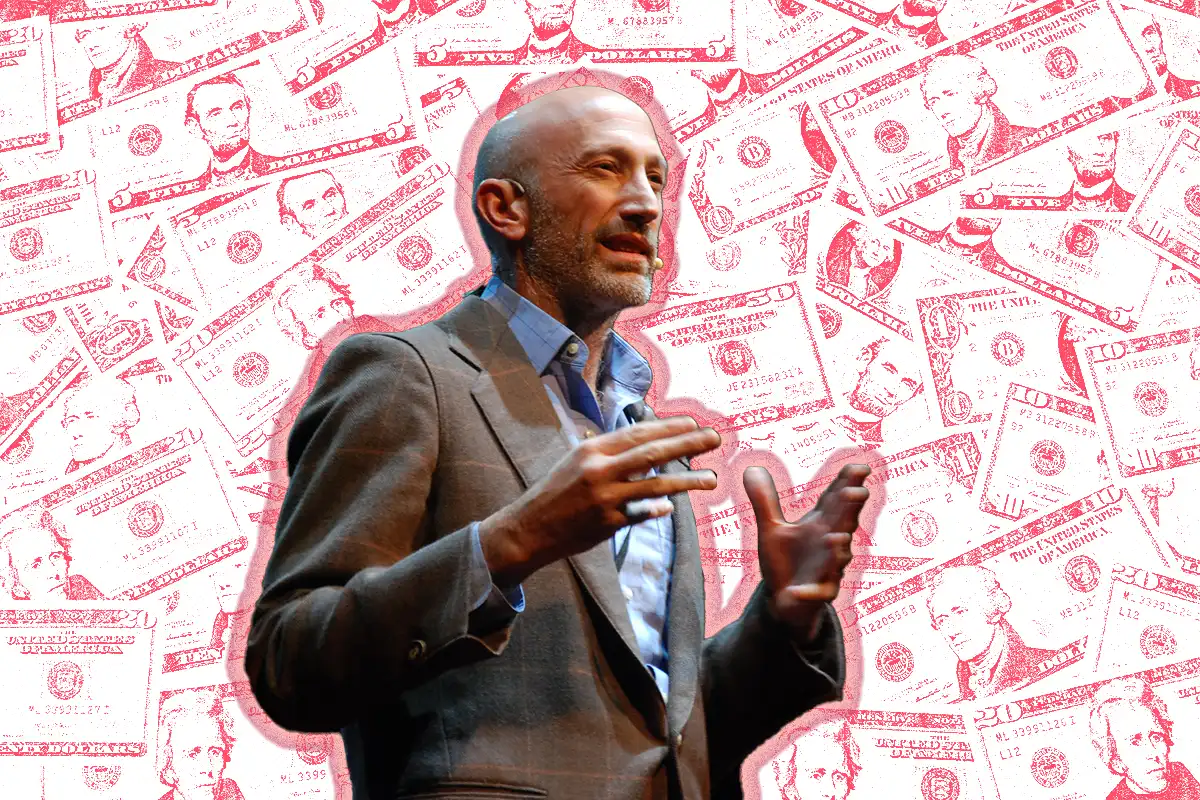

A key message of the burgeoning psychedelic medicine industry is that widespread access to drug-assisted therapies will alleviate the suffering of a largely depressed society. But can altruistic outcomes truly be achieved through the current pharmaceutical paradigm? That answer depends on who you ask. In a recent essay for Business Insider, the co-founder of Nue Life Health, a telemedicine ketamine provider, spoke out saying that the telehealth ketamine industry is increasingly prioritizing profits over the wellbeing of patients.
Juan Pablo Cappello, a self-described serial entrepreneur, believed in the promise of psychedelic medicine. He chose to build a company around ketamine because of its legality and the growing body of research demonstrating its effectiveness in treating various mental health conditions. He started Nue Life Health in 2021 to help tackle the mental health crisis exacerbated by pandemic lockdowns. By 2023, he sold the business, however, saying that once he got into the industry and looked around, he was alarmed by how many ketamine companies doing the same thing as him were putting profits over the health and safety of their patients.
“As the [ketamine telehealth] industry matured, I began to feel like companies were putting profits over patients,” Cappello writes. “I didn’t want to do the same to keep raising capital for Nue Life, and the company was acquired in 2023. I’m now speaking out, urging the industry to enforce higher standards on who can prescribe ketamine and ensuring patients have been suitably assessed before being prescribed it.”
READ: Types of Ketamine—Which One Works Best?
The goal of his business — aside from wanting to support patients with their mental health — was to ensure that patients used the minimum amount of ketamine possible to achieve a therapeutic reset. Only two to three ketamine lozenges were shipped at a time, and if a patient failed to adhere to a prescribed protocol, they were suspended from the program. Medical doctors assessed patients and made the final call as to whether they should receive another dose of ketamine. The business also offered access to meditation, yoga, and group therapy through the platform, along with professional monitoring of patients’ exercise and sleep patterns through Fitbit, iPhone, and other digital tools, with their consent.
Two and a half years after launching Nue Life, Cappello says that other businesses came online offering more ketamine doses for considerably less money.
“We always knew there would be some tension between maintaining ethical patient care and meeting investors’ financial expectations,” Cappello writes. “As low-cost providers flooded into the at-home ketamine space, it became very difficult to compete in a way that wasn’t solely focused on selling patients more ketamine.”
Cappello says that the business got to a point where it needed to raise more capital to break even. Prospective investors were mostly interested in customer acquisition costs and the company’s lifetime value to customers. “It felt like I was being asked what I was going to do to sell people more ketamine,” he writes. Cappello says he was uncomfortable treating patients like customers and couldn’t ignore the economic incentives driving a race to the bottom in the industry.
“While at Nue Life, I witnessed through mystery shoppers how some providers prescribed ketamine without what I believed to be an adequate assessment of patient suitability,” Cappello writes. “Since leaving, people still working for ketamine providers have confided in me about slipping standards. They have shared stories about over-prescribing ketamine and a growing focus on providing ketamine over aftercare and follow-on support.”
He says he feels obligated to speak up, particularly in the wake of Matthew Perry’s death. “The recent tragic events involving Matthew Perry are a stark reminder of the dangers inherent in this industry, and I hope it serves as a wake-up call.”
Cappello has since called for a pause on at-home ketamine therapy while the industry develops a minimum standard of care, like mandatory assessments before ketamine is prescribed, ongoing monitoring of patient outcomes, rigorous certification for all practitioners, and regular audits and penalties for non-compliance enforced by federal health agencies and professional associations.
“Ignoring the ethical and medical dilemmas of ‘maintenance ketamine therapy’ risks prioritizing profits over patient welfare,” he says.
READ: Yes, Ketamine Addiction Is a Thing. Here’s What You Need to Know.
In a statement shared with Business Insider, the current CEO of Nue Life, Daniel Love, says he and Cappello agree that patient safety should be prioritized over economic gain. He also said he’s never felt pressured by investors to pursue profit over purpose. “Our first and foremost goal is to provide safe and affordable access to those in need.”
Love says Nue Life’s current screening procedures involve medical consultations, a review of patient psychiatric history, and an assessment of their home environment. He says that judgements about prescribing medication are made solely by medical providers after reviewing data maintained by state Prescription Monitoring Programs.
Love says Nue Life would welcome clearer standards across the industry but suggested that Cappello’s call for an industry-wide pause could impact patient support: “We cannot just hit ‘pause’ for a patient in the middle of treatment. There are second-order impacts one would need to think through. What would people who need support and help do in the interim?”